
Emma Guillen Fuentes
Student of the Masters in Political Analysis and Governance in the Open University of Catalonia Specialized in governance and development.
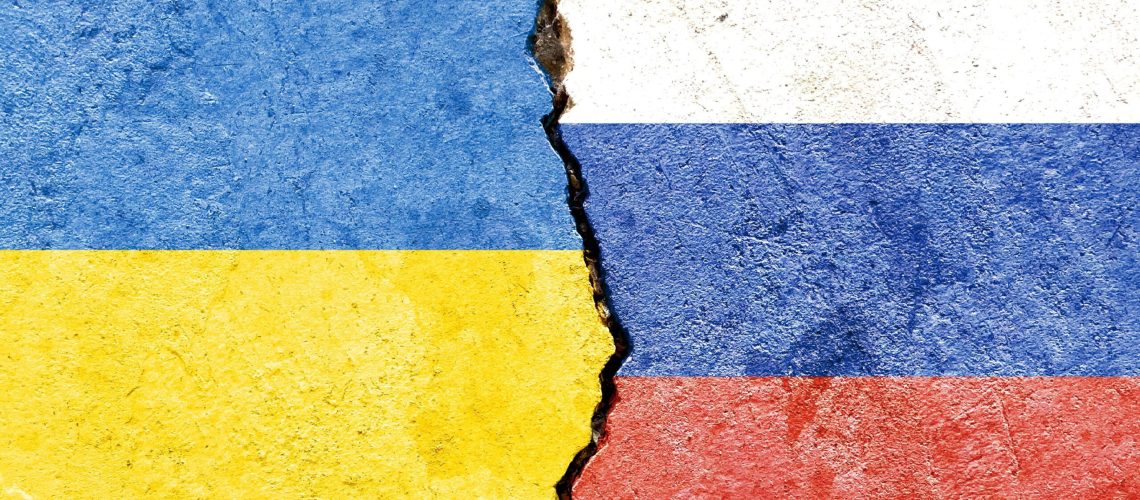
A new aspect is lately coming to the forefront of the European debate, and its not weather we need an European army but rather what will happen when Ukraine will join the European Union and how will affect the European Union(EU). But after seeing some analysis and watching the origines of the conflict the main that came to mind was: what will happen if in the end Ukraine joined the EU, will that affect Russian perspective ? Will it pose a future problem ?
And at first it seemed straightforward, as the issue that Russia may have if Ukraine joined the EU revolved around three main aspects: Food security, energetic security and mineral availability. However, and despite the relevance of this factors, a piece of the puzzle was still missing. At some point, we came back to the theory proposed by Mackinder. The heartland. And although this theory was ment to explain global power dynamics, it has provided an excellent framework to understand the Ukraine- Russia war.
The heartland theory, states as follows: the one who rules the heartland will rule over the World Island. And who controls the World Island will create the conditions for the World Control.(Arancón, 2013)
And even though, the understanding of the theory is key, to fully comprehend the Ukrainian Russian war, it is essential to understand the mindset of the Russians. And as Winston Churchill said in 1939: “(Russia is) a riddle wrapped in a mystery inside an enigma. Perhaps there is a key. That key is Russian national interest.” (International Churchill Society, 2022)
But to understand Russian national interest we need to go a step further and understand not only their geopolitical interest but also their security concerns, those that have influenced their history and foreign policy. Two of the most significant concerns are: the limited availability of warm-water ports and its persistent fear of invasion.
The first challenge, the reliable access to maritime access. If we examine a Russian map of the major strategic ports. One that includes, the ports of: Kaliningrad, St. Petersburg, Novorossiysk and Vladivostok. It becomes clear that several of them face seasonal difficulties during the winter season. And even though nowadays modern icebreakers mitigate the effects, the season leaves Russian actions limited. Furthermore, several of the ports are geographically constrained by the surrounding NATO or European states; limiting not only its rapid maritime response, but also its access to key sea routes(Marinero, 2023).
Thats why for all the above reasons, one of the main priorities for any Russian leader has been providing a reliable warm-water port.
The second challenge and major concern has been the vulnerability of the border with Europe. Although Russia is geographically vast, and is much protected by natural barriers. The western border is noticeably different. As it corresponds to the region known as the European Plain. The European plain stretches from Western Europe through Poland and Belarus into Russia, with very few natural defensive barriers.
Historically, the European Plain has served as the main route for invasions into Russian territory . In the recent history the most memorable ones are Napoleon’s invasion in 1812 and Nazi Germany’s invasion in 1941. The past experiences have contributing to a culture in which buffer zones and territorial distance are essential components for the nations survival.
With this historical understanding, countries like Poland and Belarus have been seen in Russian strategic thinking as important buffer territories. Making the different influences in this countries a Russian security issue.
Now shifting perspectives, the importance of Ukraine for the European Union becomes extremely clear, as it could strengthen key strategic sectors. As Ukraine is the second largest exporter of grain, and agricultural products globally. It will provide the union with a greater food security. In addition Ukraine posses substantial natural gas reserves, one of the largest in Europe, as well as a great potential for renewable energy development, amongst we can find Hydrogen (Energy Security – Ukraine Energy Profile – Analysis, s. f.).
Yet, beyond the economic and energy considerations Ukraine has a greater geopolitical dimension. As it occupies a critical position in the heartland theory. Through the lenses of Mackinder Ukraine can be understood as a strategic getaway between Europe and the territories of Eurasia.
If the door to the heartland were to become an active member of the European Union, it will change and impact the geopolitical landscape of the region in a rather significant way.
As for the Russians will mean the lose of its autonomy and strategic depth but its whole influence over the buffer states, breaking all sense of security, as their potential enemies will have access to their territories through the North European plain.
While at the same time, encouraging other former countries of the USSR who are now seen as buffer states to follow in their footsteps to get closer to the European Institutions. Leaving russia not only without certain type of allies but most importantly without protection from its enemies and without influence over the region that has most of the essential natural resources of Europe.
In this sense the conflict between Ukraine and Russia cannot be understood solely through economical and political factors. As it is one that brings to light deeper geopolitical dynamics rooted in geography, historical memory, and strategic perceptions of security and influence across the Eurasian continent. And its necessary to consider it as adding a member to the European Union may include risk that at the moment the EU can not face.
Arancón, F. (2013, diciembre 27). Teoría del Heartland: La conquista del mundo. El Orden Mundial – EOM. https://elordenmundial.com/teoria-heartland-conquista-del-mundo/
International Churchill Society. (2022, abril 3). The Enigma of Russia. International Churchill Society. https://winstonchurchill.org/churchill-bulletin/bulletin-166-apr-2022/the-enigma-of-russia/
Marinero, James.(2023, junio 24). Russia is Challenged by 11 Time Zones with Few Ice-Free Ports. The Dock on the Bay. https://medium.com/the-dock-on-the-bay/russia-is-challenged-by-11-time zones-with-few-ice-free-ports-58db6f242895
Ukrainian grain exports explained. (s. f.). Consilium. Recuperado 11 de abril de 2026, de https:// www.consilium.europa.eu/en/infographics/ukrainian-grain-exports-explained/